We arrived late in the afternoon, dropped our bags and immediately headed out to get a few of the touristy things off our list. We made our way to Dam Square, saw the Royal Palace and the Nieuwe Kerk, and wandered through the surrounding streets with no real plan.
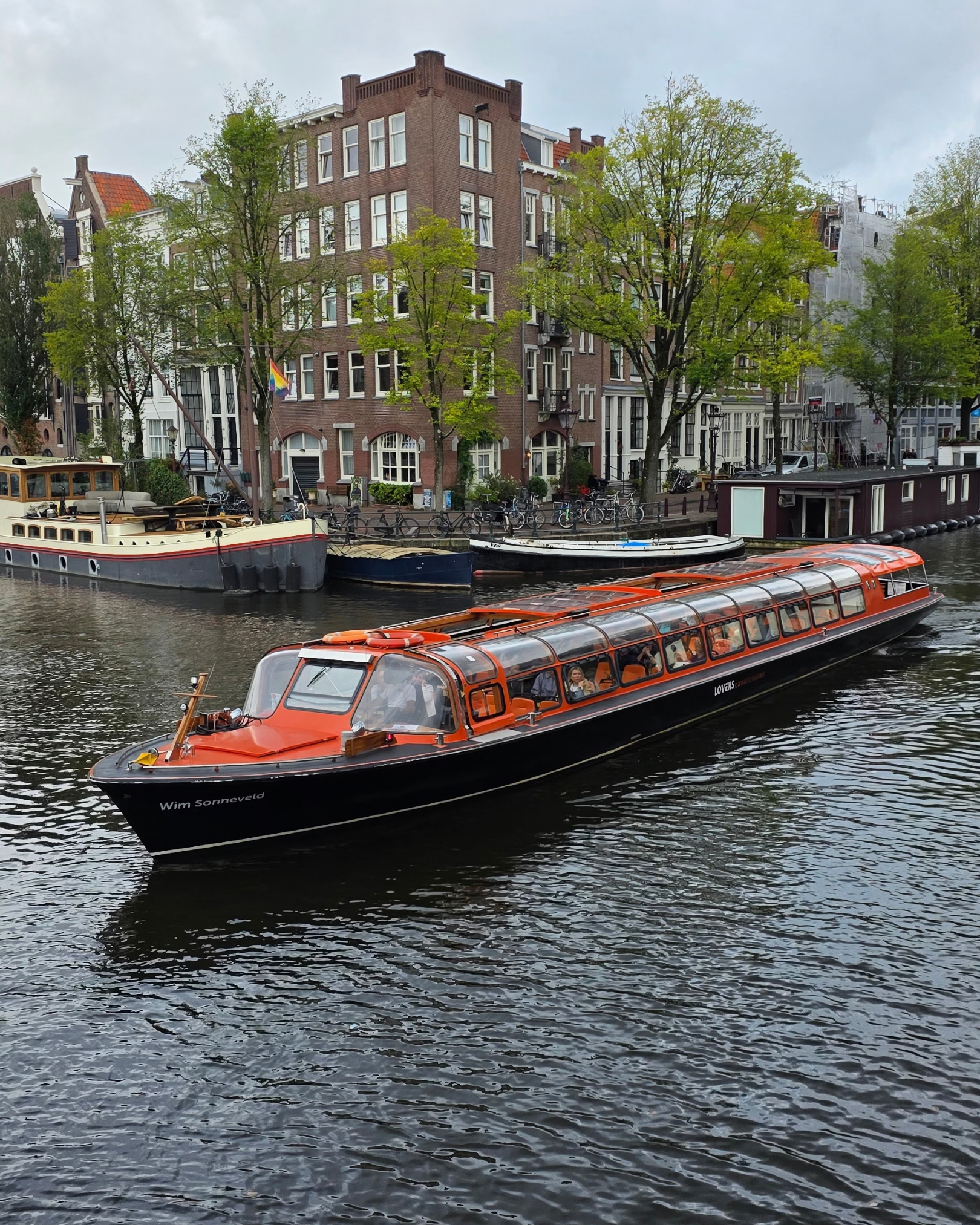
We knew Amsterdam had canals, obviously, but we had not realized just how many there were or how completely they shaped the city. Every few minutes we seemed to turn a corner and find another postcard worthy view. Shima stopped constantly to take photos, which meant Jean spent a good portion of the afternoon waiting patiently on bridges.
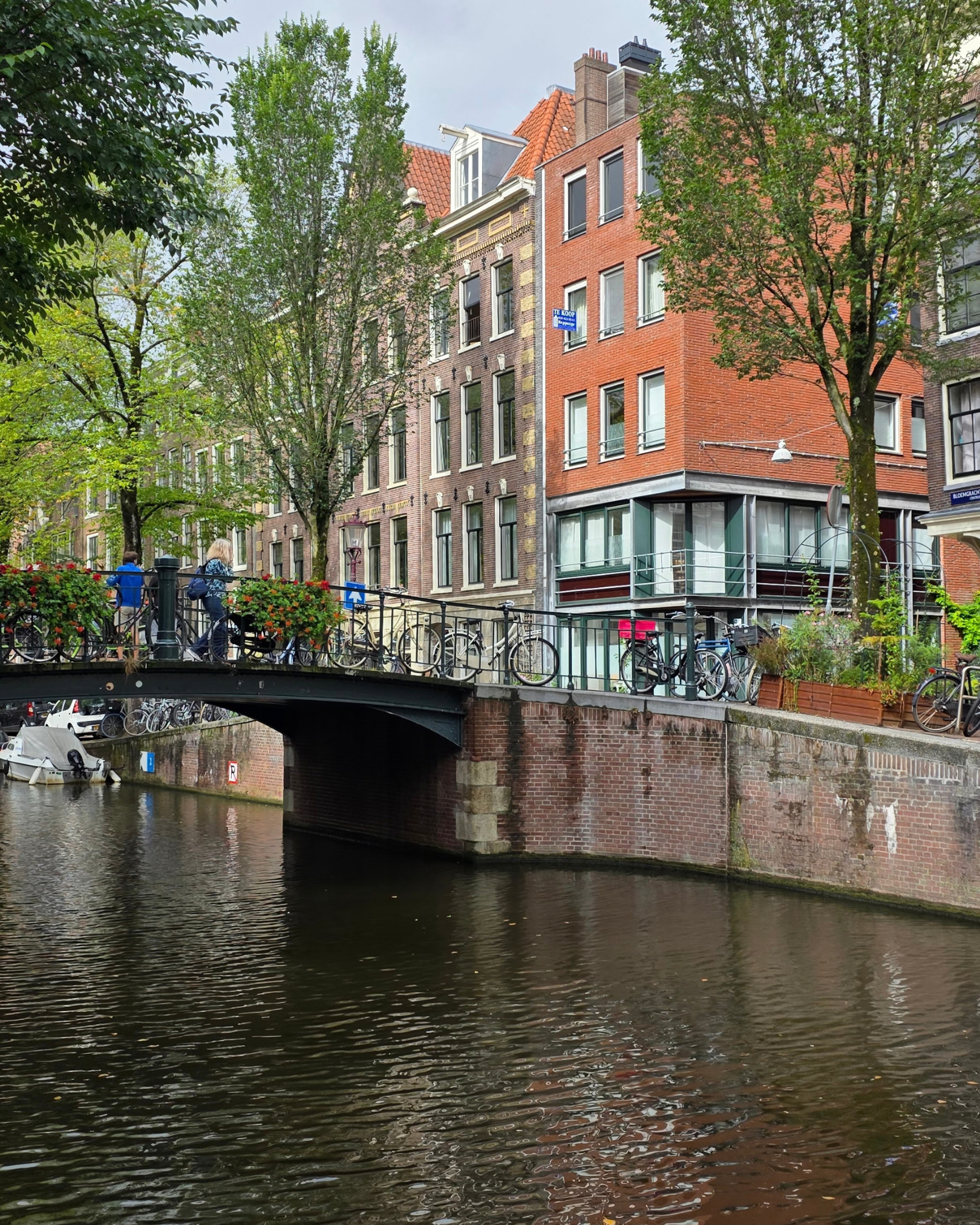
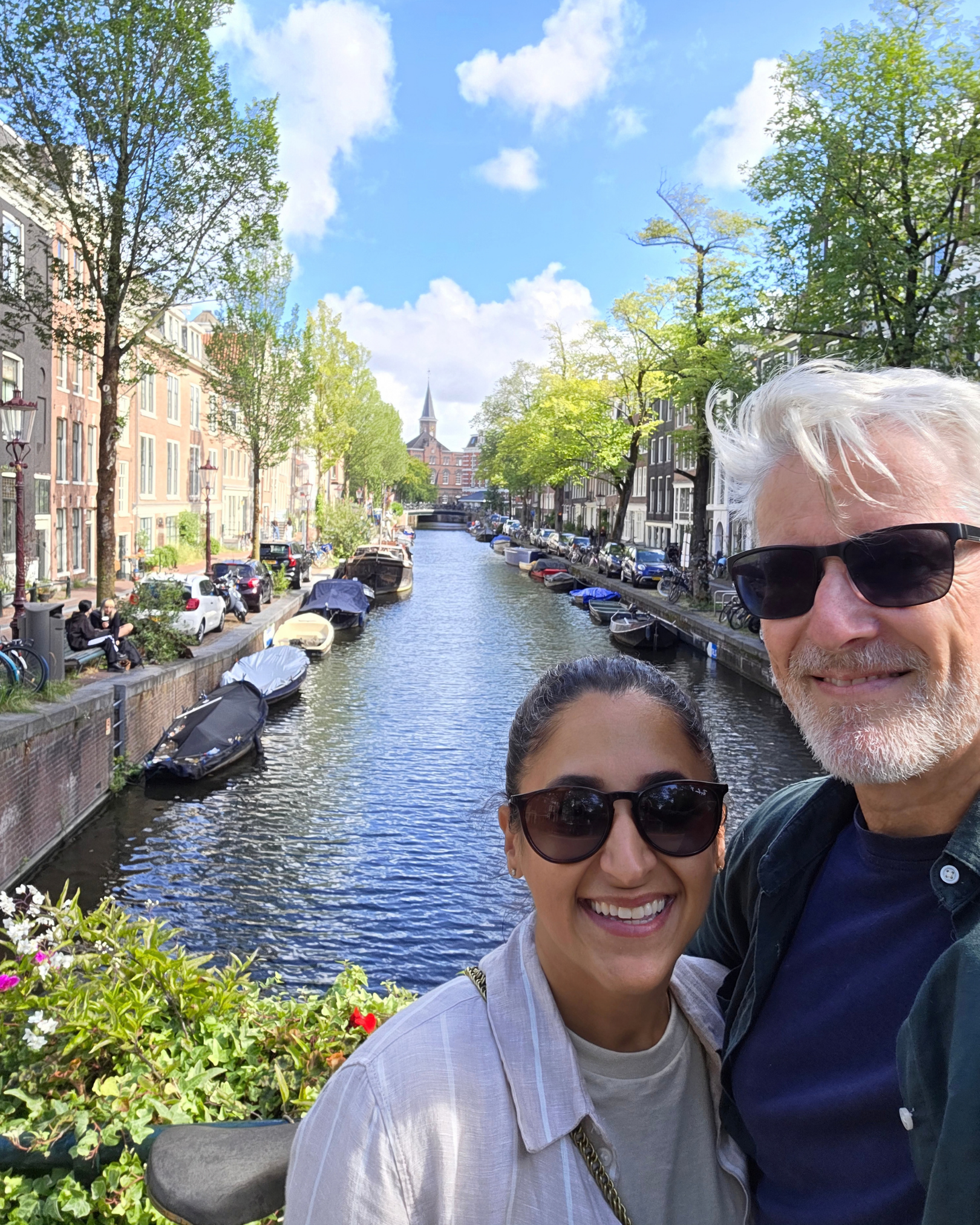
Then there were the bicycles. They came from every direction, moved at impressive speed and clearly had the right of way, whether we understood the rules or not. Crossing a street became a team exercise: look for cars, look for trams, look for bicycles, then look for bicycles again.
We stayed at the beautiful Pulitzer Amsterdam, a collection of historic canal houses woven together between the Prinsengracht and Keizersgracht in the Nine Streets area. It was perfectly situated beside the Jordaan and within walking distance of almost everything we wanted to see. The hotel itself felt like a destination, with layered interiors, intimate spaces and endless design details to notice.
That evening we had dinner at Brasserie Marie, a French inspired restaurant overlooking the Amstel River. It was a polished first taste of the city and a very good way to ease into the trip.
There is no better way to understand Amsterdam than by joining the locals on a bicycle, so we began our second day with Mike’s Bike Tours. Riding through the city was equal parts exciting and mildly terrifying, but once we found our rhythm, it gave us an entirely different perspective.
Our guide stopped the group throughout the tour to share the history of the city and explain how Amsterdam was built on soft, marshy ground. Many of its buildings rest on long wooden piles driven down to a firmer layer below. We also learned why so many of the narrow canal houses have hooks projecting from the top. With steep staircases, tight interiors and very few elevators, furniture and goods were historically hoisted up from the street and brought in through the windows. Suddenly those hooks made perfect sense.
One of the things that impressed us most was how beautifully preserved and maintained everything appeared. The doors, railings and window trim often looked freshly painted, and so many of the façades had a pristine, high gloss finish. Anyone who has tried to keep a high gloss surface looking flawless knows this is no small achievement.
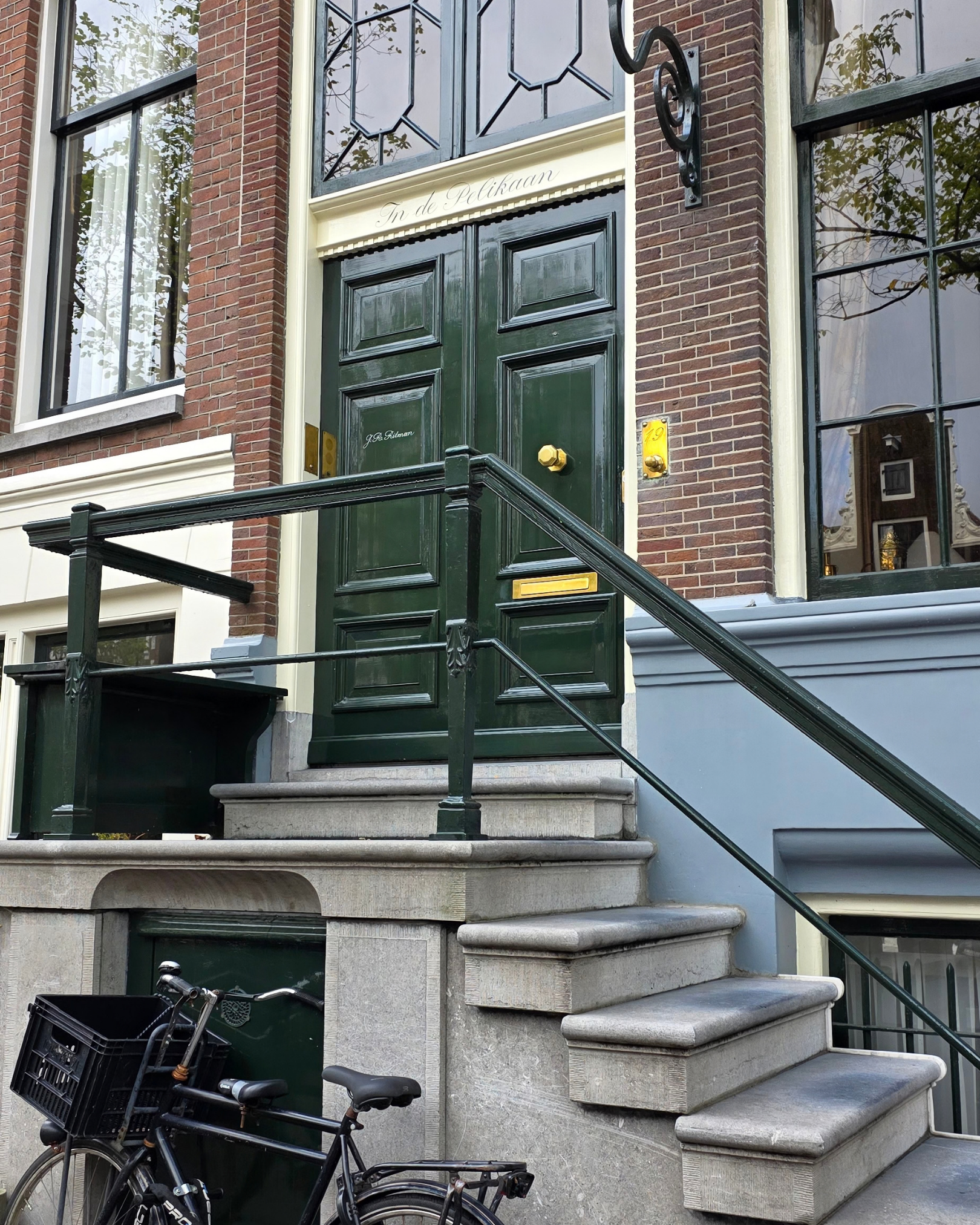
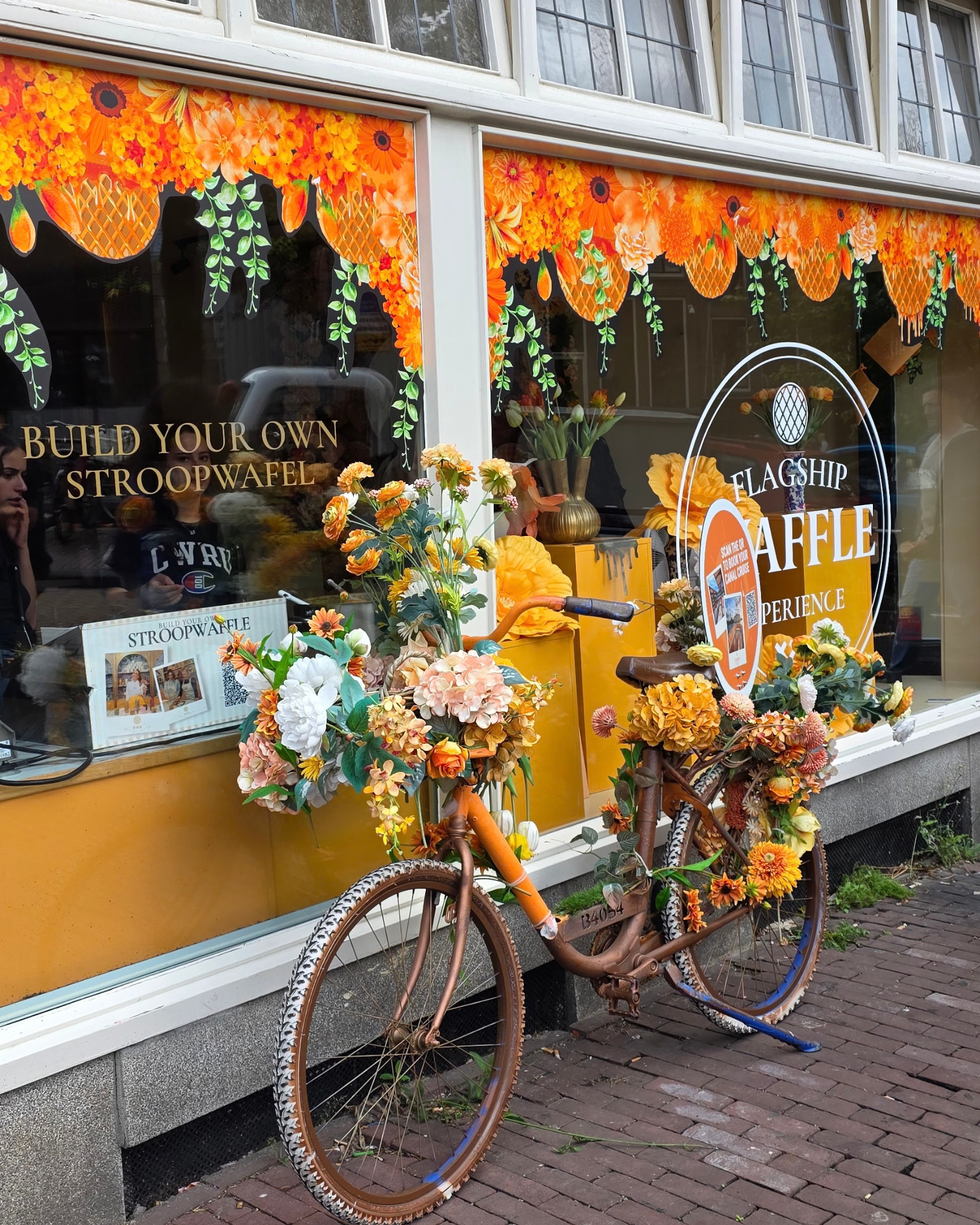
After the tour, we returned to the Jordaan and explored it more slowly. It had a wonderful neighbourhood feeling, with tiny gardens, beautiful house fronts, independent shops and busy little cafés tucked along the canals. It felt lively and residential at the same time, and quickly became one of our favourite parts of the city.
We stopped for lunch at a corner restaurant overlooking a canal and settled in for some excellent people watching. Between the pedestrians, cyclists and cars sharing a surprisingly small amount of space, there were several near collisions and no shortage of entertainment.
We had hoped to visit both the Van Gogh Museum and the Anne Frank House, but this was where our relaxed approach to travel worked against us. Both were sold out. If either is important to you, book well in advance. Apparently, simply arriving in Amsterdam and hoping for the best is not an official ticketing strategy.
That evening we had dinner at Jansz., followed by cocktails at the intimate and beautifully designed Pulitzer’s Bar. From there, we changed the mood completely and ended the night at Bourbon Street for live music. One of the things we loved about Amsterdam was how easily the evening could move from elegant cocktails to a loud, casual music bar without feeling like we had crossed the entire city.
We started the morning at Box Sociaal in the Jordaan. It was busy with a mix of locals and tourists and had exactly the kind of easy, energetic atmosphere we wanted for breakfast.
From there, we spent the day doing what we love most when travelling: wandering without rushing. We moved through antique shops ranging from wonderfully jam packed to sparsely curated, visited small galleries and found a few pieces of art that were easy enough to bring home as mementos. Art is one of our favourite things to collect while travelling. It takes up less room than furniture in a suitcase and instantly brings back the feeling of a place once it is hanging at home.
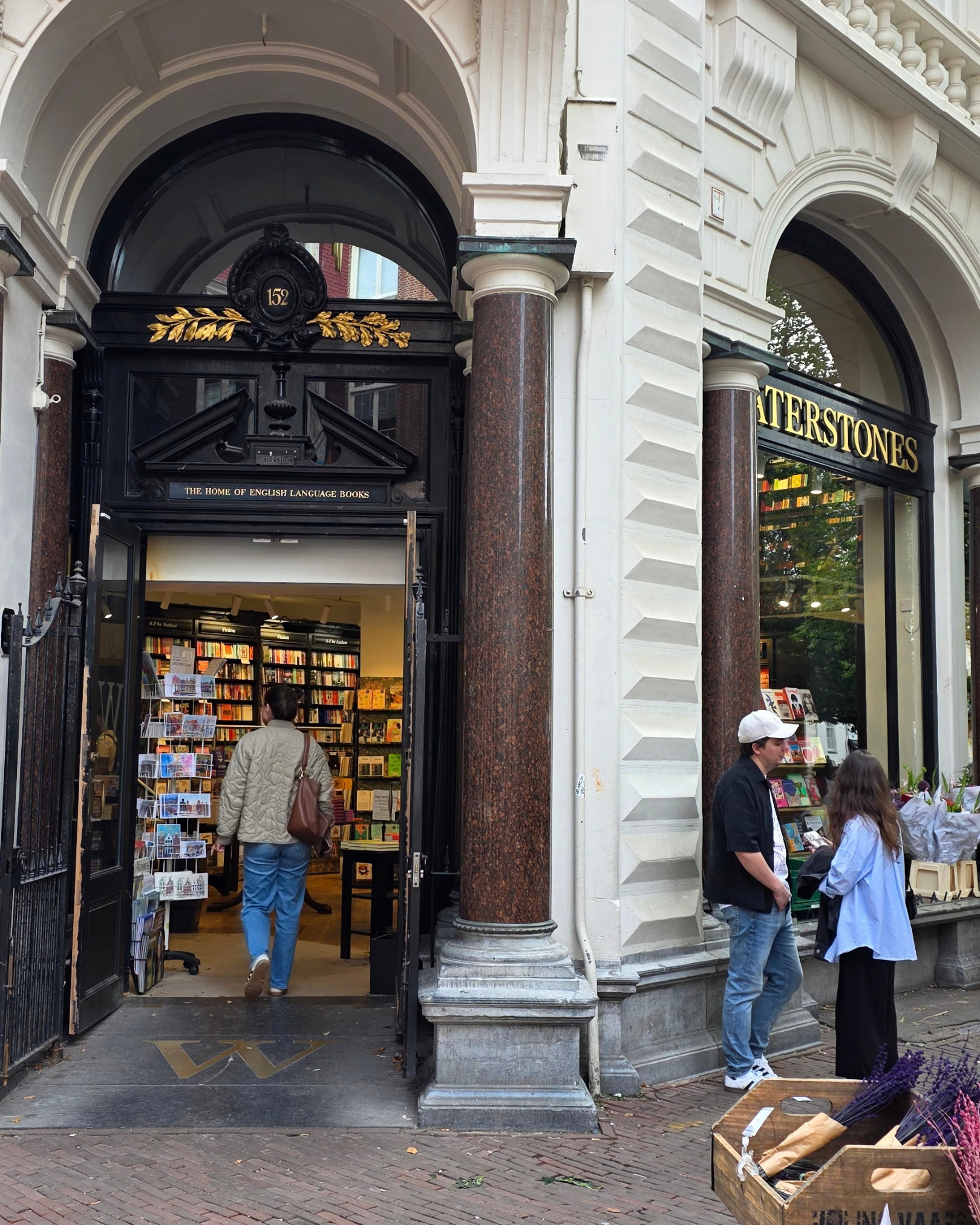
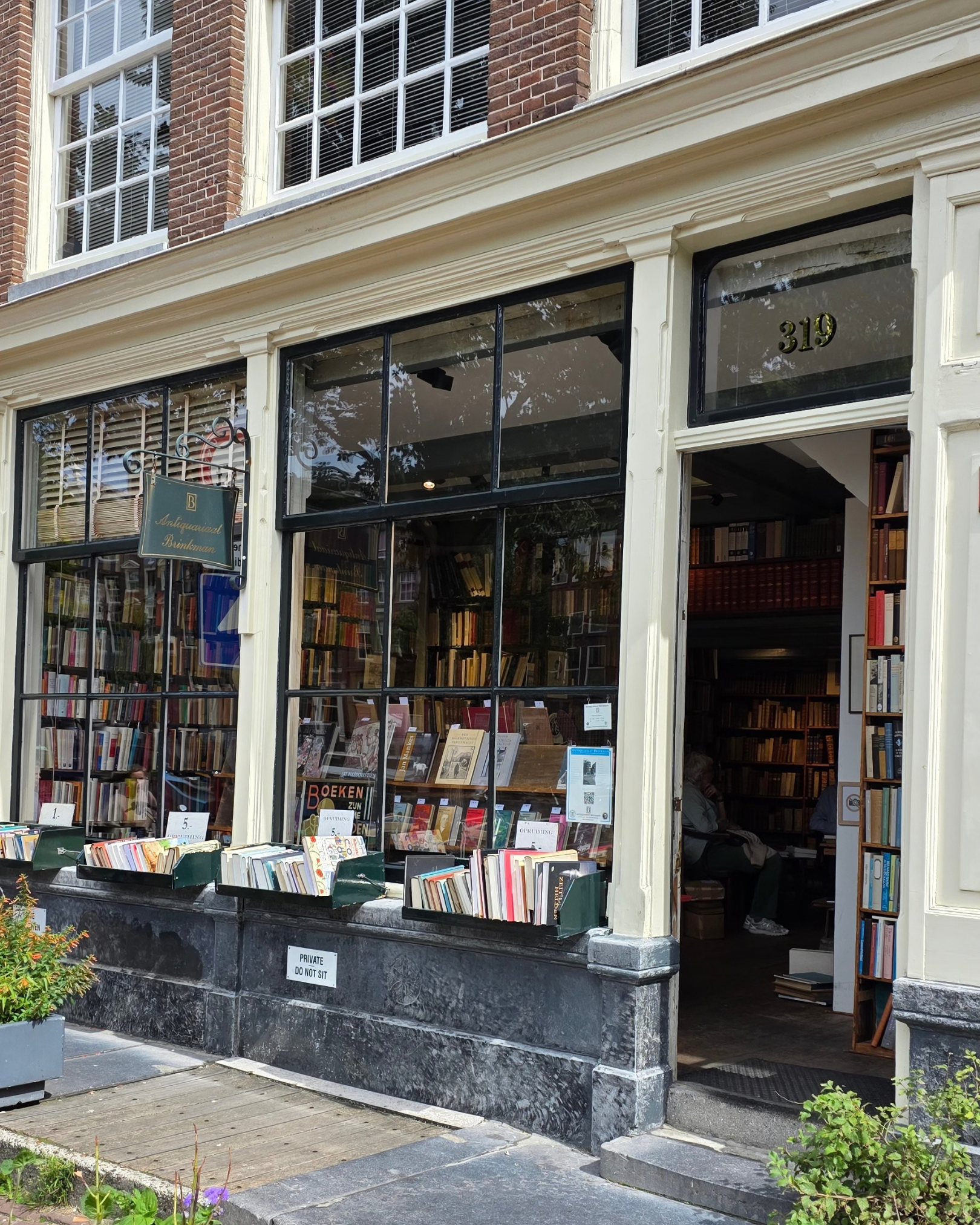
We also could not stop noticing the number of bookstores. They seemed to be everywhere, and the ones we came across felt independently owned, inviting and genuinely part of the neighbourhood. Even the Pulitzer had a cozy reading room tucked into its lounge, which made reading feel less like an amenity and more like a natural part of Amsterdam life. The city seems to have held onto a culture of slowing down, reading and making space for ideas, which we loved.
Amsterdam offered plenty of inspiration beyond its architecture. At The Frozen Fountain, contemporary Dutch design was presented as a mix of furniture, art, craftsmanship and experimentation. Other concept stores blended fashion, fragrance, accessories and interiors in a way that felt completely cohesive.
We stopped for lunch at Black & Blue, then continued meandering through the streets and shopping at an unhurried pace. Dinner that evening was at Restaurant Trees, an intimate spot with an open kitchen and canal side tables.
Later, we walked through Amsterdam’s famous Red Light District. It is one of the city’s most talked about areas, and we were curious to experience it for ourselves. Beyond what it is known for, it is also one of Amsterdam’s oldest neighbourhoods, filled with narrow streets, historic buildings, canals, restaurants and a great deal of energy after dark. It was lively, eye opening and undeniably part of the city’s story. We took it for what it was: a neighbourhood unlike anywhere else we had visited.
We woke to heavy rain and gave the weather a chance to reconsider, which it did not. After a slow start, we took the free ferry across the IJ to NDSM in Amsterdam Noord.
The former shipyard feels completely different from the historic canal district. It is industrial, creative and a little rough around the edges, with old warehouses, shipping containers, large scale art and unexpected spaces repurposed for culture and hospitality.
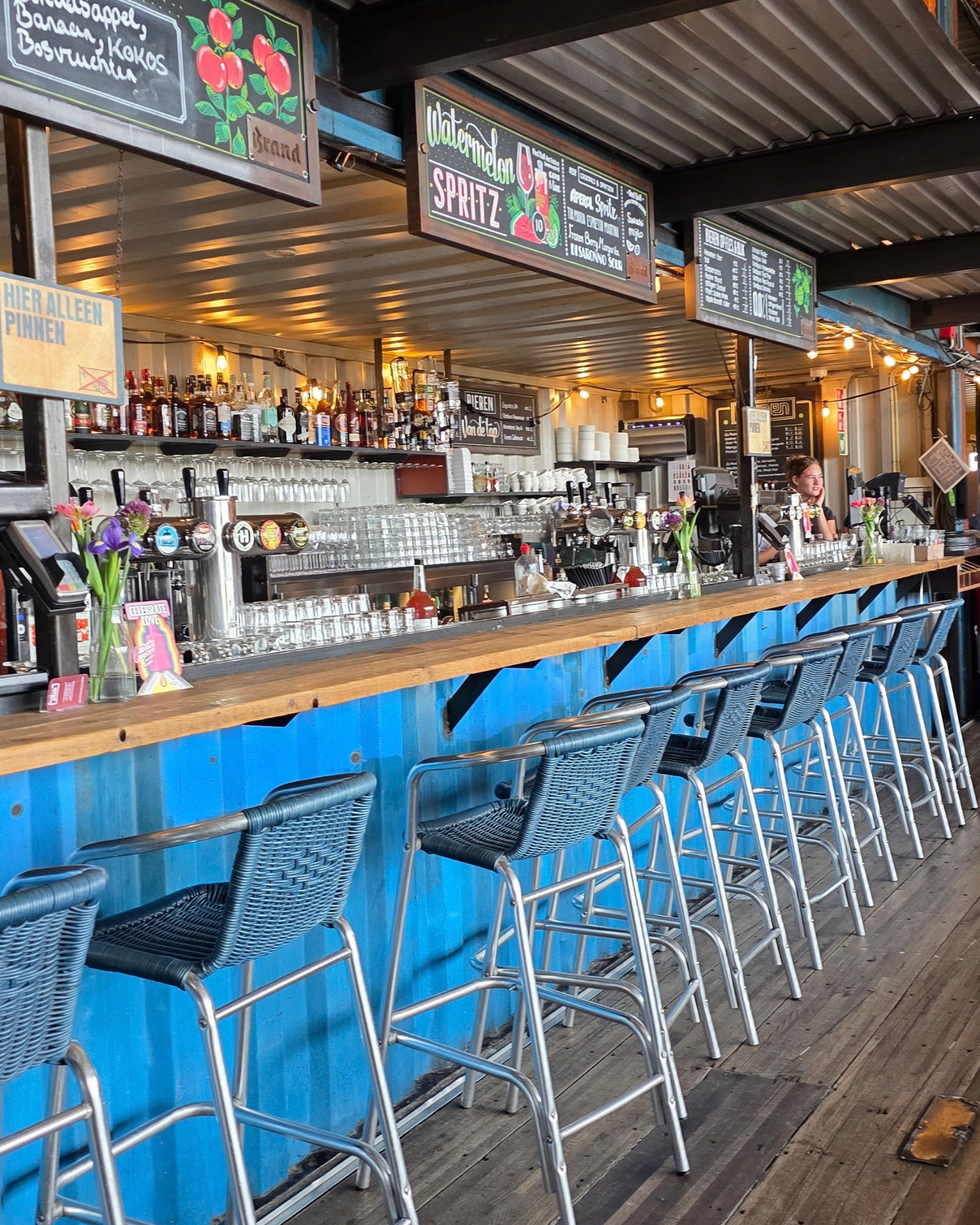
We had lunch at Pllek, a casual restaurant built partly from shipping containers with both dining and lounge seating. As the rain became heavier, we settled into the leather lounge chairs and took our time over lunch while watching it pour outside. There are worse places to be stranded by the weather.
Once the rain eased enough for us to venture out, we walked over to the STRAAT Museum. Housed in a former shipbuilding warehouse, the scale of the work allowed us to appreciate graffiti and street art in a completely different way. When you can step back and see an enormous work in its entirety, you begin to notice the composition, technique, storytelling and social commentary rather than seeing only a painted wall.
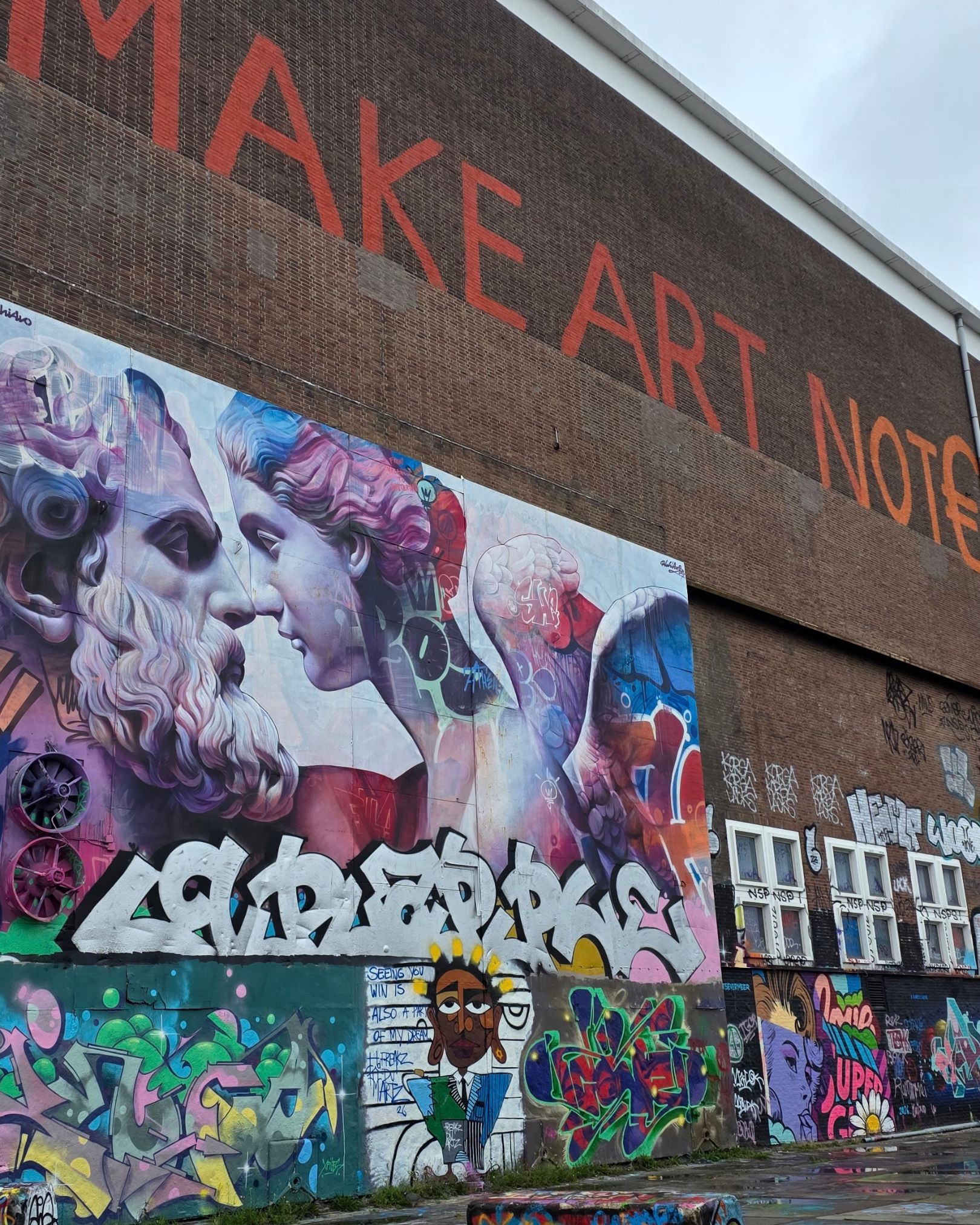
The setting made the experience even more powerful. The industrial building, the history of the old shipping yards and the monumental artwork all belonged together. We came away with a new appreciation for street art as both creative expression and a way of communicating ideas in public spaces.
We returned to the hotel in the afternoon for a rest, then headed back out and wandered into a few Irish pubs to soak up the evening energy.
Dinner was at Mata Hari, a moody restaurant tucked into the Red Light District. It is named for Mata Hari, the Dutch dancer who became one of history’s most famous alleged spies during the First World War. The dark, layered interior felt perfectly suited to both her story and the surrounding neighbourhood.