
We hear it all the time. A client has driven to our showroom for a design presentation, or has come to
spend an afternoon browsing, and before leaving asks us the same question: Where should we go for
lunch? Is there anywhere nearby to do a little shopping?

The answer is yes. Quite a few places, actually.

Newmarket and Aurora may be north of the city, but they are far from simply being suburbs to pass
through. Between our historic main streets, thoughtfully curated boutiques, independent restaurants,
cafés, galleries and beautiful new cultural spaces, this area has become a destination in its own right.

We decided to spend a day visiting some of the local businesses we love and a few newer discoveries
we think you should know about. If you are coming to Niche Decor from Toronto or elsewhere in the
GTA, consider this your invitation to stay a little longer. If you already live nearby, perhaps it will inspire you to rediscover what is right outside your door.

Morning Coffee at Metropolis

We began on Main Street Newmarket at Metropolis Mercantile + Café, a place that is difficult to describe as simply a coffee shop. On the main floor, the café shares space with a small mercantile
filled with gifts, cheeses, chocolates, spreads and other lovely things you did not necessarily arrive needing but may leave with anyway.

The café is lively throughout the day, with people meeting friends, working quietly or settling in with one of their specialty coffees. Their focaccia is something of a local treasure and often sells out, so if you see it, do not deliberate for too long. Just order it.

Upstairs is The Cabin, a warm, rustic lounge that leans fully into its Canadiana character. Tufted cognac leather furniture, vintage inspired details and playful Canadian art give it the feeling of a retreat tucked into Main Street. Both floors have their own personality, yet each feels busy, welcoming and made for lingering.

A More Conscious Closet

From there, we crossed over to Conscious Find, Kelly’s curated secondhand fashion shop. This is not the kind of store where you have to dig endlessly in the hope of finding one good piece. The selection is edited, current and fashion forward, with everything from children’s clothing to elevated pieces that can anchor your entire outfit.

Kelly is warm, personable and a stylist herself, so the experience feels more like shopping with someone who understands how to pull a wardrobe together. She can help clients rethink what they
already own, identify what is missing and shop with greater intention. It is proof that buying secondhand can still feel polished, personal and completely current.

Everyday Goods, More Thoughtfully Chosen

A short walk along Main Street brought us to Replenish General Store, where sustainable essentials, refillable favourites and consciously made goods offer a more considered approach to everyday living.

Thai, the owner, is passionate about featuring local products and supporting the people behind them. That philosophy can be felt throughout the store. Replenish makes it easier to make more responsible choices without turning the experience into a lecture or sacrificing the pleasure of discovering something useful and well designed.

Niche Decor Newmarket

The Hostess Gift Stop

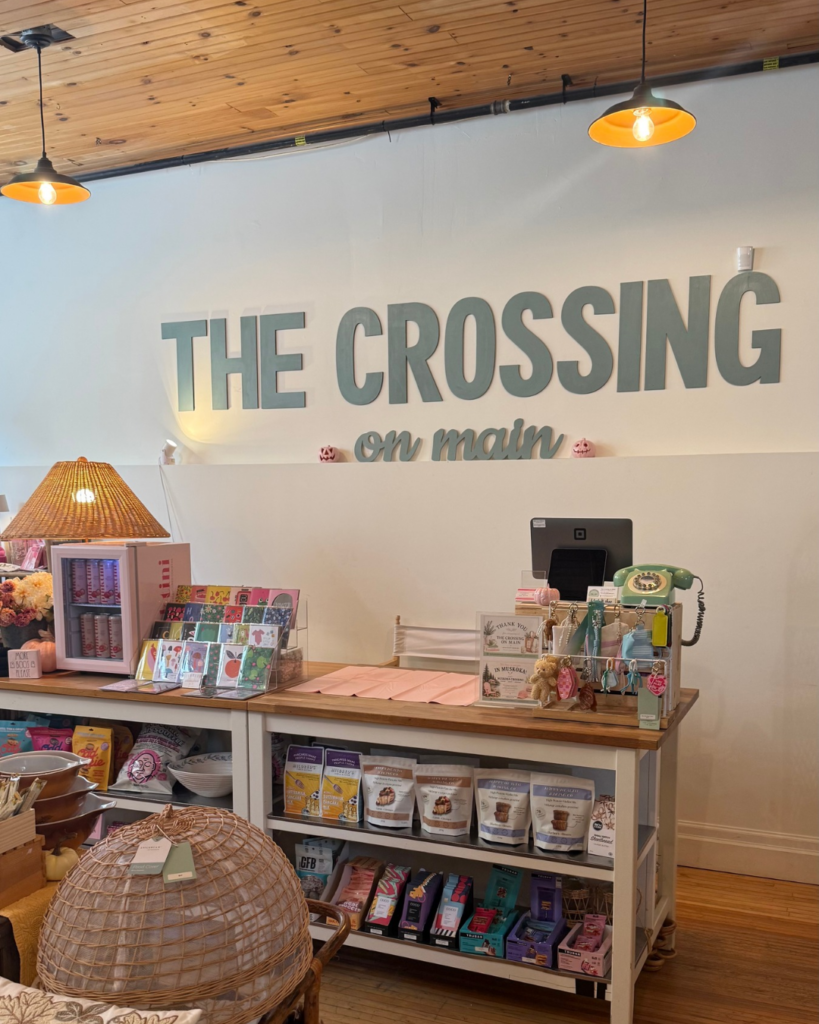
Tucked at the back of Replenish is one of Main Street’s newer additions, The Crossing on Main. Owner Amanda is full of life and an absolute joy to talk to, and her shop has quickly become our first stop whenever we are looking for unique gifts.

The Crossing is filled with elevated essentials, including small décor, kitchen pieces, textiles, garden goods, specialty foods and gifts. The collection feels thoughtful without being overly precious, and there is almost always something that would make the perfect hostess gift. Of course, there is also a very good chance you will find something for yourself while you are there.

A Toy Store Built Around Wonder

We continued to Tommy’s Toys & Treasures, where owner Diana showed us around her children’s shop built on imagination, curiosity and the simple pleasure of play.

The toys are chosen to encourage creativity, exploration, storytelling and time spent together. Many have the enduring quality of the toys we remember from childhood, the kind that can be kept, passed along and loved by more than one generation. In a world full of screens, noise and things designed to be quickly replaced, Tommy’s feels like an invitation to slow childhood down and preserve a little more wonder.

Aurora’s New Cultural Heart

From Newmarket, we made our way to Aurora Town Square. Rooted in the town’s history, this new 32,000 square foot cultural destination connects contemporary architecture with the historic Church Street School and brings together the Aurora Cultural Centre, Aurora Museum & Archives and Aurora Public Library.

The space includes galleries, a flexible performance hall, arts programming rooms and public gathering areas designed for concerts, exhibitions, workshops, community events and celebrations. It is impressive not only as a building, but as a sign of investment in arts and culture close to home. We love that Aurora now has a place where history and contemporary community life can exist side by side.

Inside Town Square, we stopped at My Indie Coffee for an afternoon reset. We usually visit their Newmarket roastery, but the Aurora café offers the same locally roasted coffee along with sandwiches, smoothies and other light options. We shared a sandwich, had another coffee and gathered enough energy to continue. A carefully paced shopping day requires strategy.

A Gourmet Market Worth Browsing

Our next stop was Summerhill Market, a boutique grocery experience and a real gem for Aurora. The
market is known for its extensive selection of house made prepared foods, along with scratch baked goods, fresh florals, produce and specialty groceries.

It is the kind of place where picking up one thing for dinner can easily become a full browse. Whether you are assembling an easy meal, bringing something to a gathering or simply want ingredients that feel a little more special, Summerhill makes grocery shopping feel less like an errand and more like part of the day out.

Personal Style at Lemonberry

At Lemonberry, manager Tanya showed us around the independently owned boutique that opened in 2004. The store carries clothing, denim, jewellery and accessories, with a strong selection of Canadian brands as well as a small assortment of beauty, bath and home products.

The style is easy and wearable, but still personal and well curated. It is the kind of boutique where you can find the piece that quietly changes everything else in your wardrobe, and the team can help you see how to wear it beyond one occasion.

Niche Decor Newmarket

Original Art, Close to Home

We then visited Micak Contemporary Art Gallery, founded by Katie Micak in her hometown of Aurora after years of experience working in galleries, exhibitions, digital art and curatorial practice. The gallery represents emerging and mid career professional artists and brings an exciting range of original contemporary work to the community. Depending on the exhibition, visitors may encounter painting, photography, ceramics, glass, textiles, art books or digital work. Katie also hosts events and curator talks throughout the year, giving people an opportunity to engage with art rather than simply view it from a distance.

For us as designers, access to original art and knowledgeable art advisory is especially valuable. When a project needs a piece with the right scale, feeling and story, Katie is someone we can speak with about sourcing work that belongs in the space rather than merely filling a wall.

Cheese, Naturally

While at the St Andrew’s Plaza in Aurora, La Jolie Cheese Shop is an essential stop. Many of our clients already know and love this specialty boutique, and with good reason. Its cases are filled with cheeses from Canada and around the world, including favourites from France, Italy, Spain and England, alongside more unexpected discoveries.

What makes the experience especially enjoyable is the team’s knowledge and genuine enthusiasm. They are happy to explain what they carry, suggest something new or help assemble a selection for dinner, entertaining or gifting. You do not need to arrive knowing exactly what you want. In fact, it may be more fun if you don’t.

Niche Decor Newmarket

Cocktails Above Main Street

As the afternoon moved into evening, we returned to downtown Newmarket for cocktails at The Postmark Hotel. The transformation of the town’s historic post office into an upscale boutique hotel has added something truly special to Main Street, attracting weddings, corporate events and visitors while bringing new energy to the surrounding businesses.

The Lobby is beautifully designed and comfortable enough for a coffee, breakfast, lunch or a quiet hour with a laptop during the day. For cocktails, dinner and the full experience, head upstairs to Overlea. The rooftop restaurant offers sweeping views of historic Newmarket, floor to ceiling windows and terraces that wrap the dining space in greenery. Its seasonal menus draw from the farm fresh ingredients surrounding the region, creating a polished Canadian dining experience that still feels connected to place.

Dinner at Bar Locale

We ended the day at Bar Locale, one of the newest additions to Newmarket’s dining scene. The
restaurant describes itself as a seamless fusion of restaurant and bar, but what makes it memorable is
the complete experience: the space, sound, food, cocktails and social energy all feel considered
together.

The menu has a Spanish influence and is designed around shareable plates, which is exactly how we
like to dine. A table filled with tapas gives everyone a reason to reach, taste and talk, while the
elevated cocktails make it easy to extend the evening.

The interior has been completely transformed and the design is exceptional. It has the mood and polish
you might expect to find downtown Toronto, yet here it is overlooking the water at the foot of Main
Street Newmarket. In warmer weather, the large patio becomes a destination of its own. It is an
exciting addition to the area and a fitting final stop for a day built around good design, local character
and lingering over the table.

Make a Day of It

There is something very satisfying about spending an entire day close to home and still feeling as though you have discovered somewhere new. What stood out to us was not only the quality of each business, but the care behind it. These owners know what they are offering and why. They are creating gathering places, introducing us to artists and makers, giving old things another life and making our towns feel more interesting, connected and alive.

Supporting local is not only about where we spend our money. It is about preserving the places that give a community its personality.

So, if you are travelling to Niche Decor for a presentation or a showroom visit, do not be too quick to head home afterward. Have the coffee. Browse the shops. Visit the gallery. Order the cocktail. Stay for dinner.

And if you already live in Newmarket, Aurora, Markham, Richmond Hill or one of the surrounding communities, consider this your reminder that some of the best days out may be much closer than you think.

Hours, menus and offerings may change. We recommend checking with each business before planning your visit.

Amsterdam had been on our travel list for years, but neither of us quite knew what to expect beyond the canals, bicycles and beautiful old buildings. What we found was a city that felt both historic and incredibly current. It was charming without being precious, design focused without trying too hard, and compact enough that we could explore most of it on foot, provided we remembered to stay out of the bike lanes. We spent five days wandering, eating, shopping and taking in as much of the city as possible. As always, we gravitated toward the places with beautiful interiors, strong design and a little personality. Here is how we spent our time in Amsterdam.


Day One: Canals, Crowds and the Tourist Checklist

We arrived late in the afternoon, dropped our bags and immediately headed out to get a few of the touristy things off our list. We made our way to Dam Square, saw the Royal Palace and the Nieuwe Kerk, and wandered through the surrounding streets with no real plan.

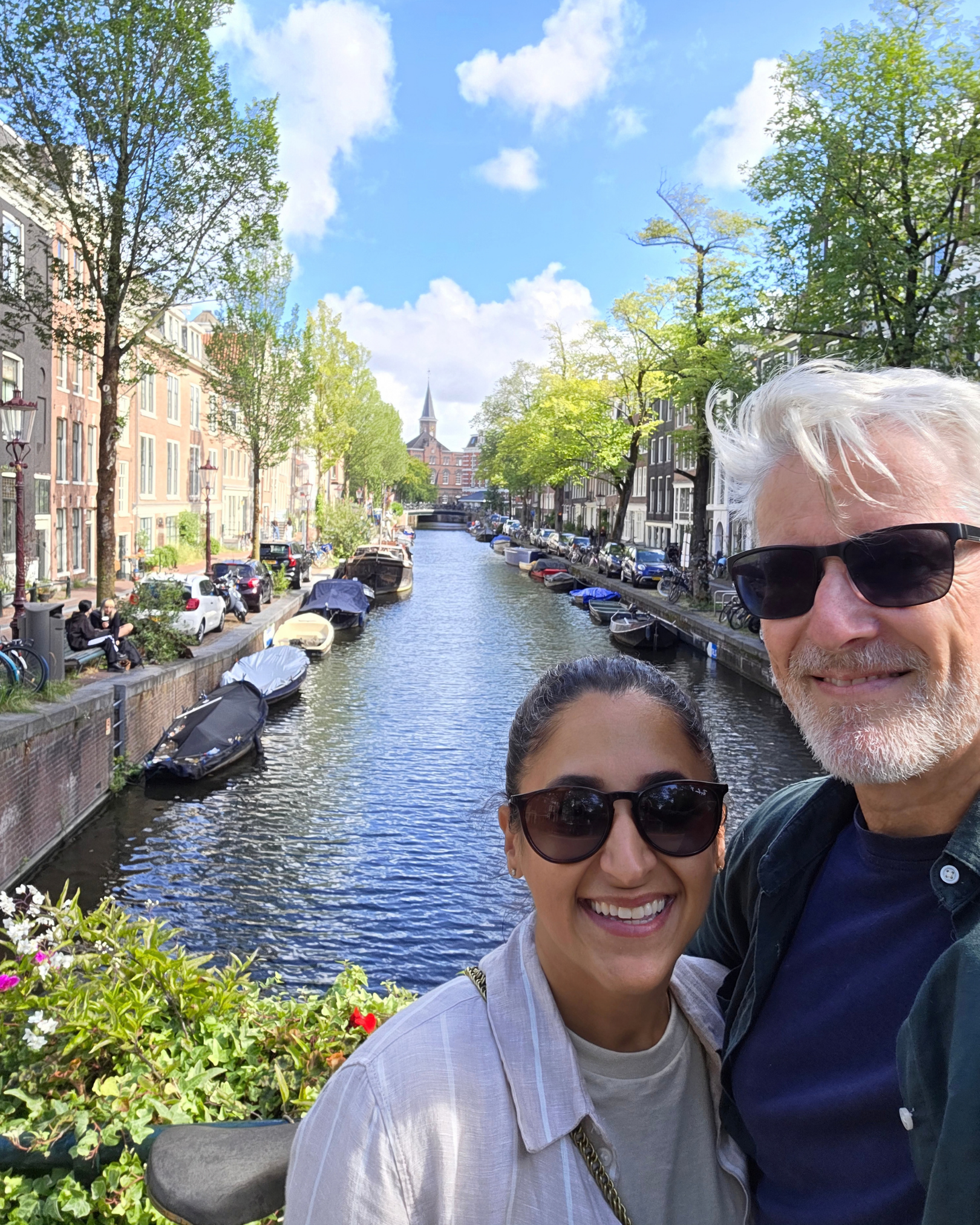
We knew Amsterdam had canals, obviously, but we had not realized just how many there were or how completely they shaped the city. Every few minutes we seemed to turn a corner and find another postcard worthy view. Shima stopped constantly to take photos, which meant Jean spent a good portion of the afternoon waiting patiently on bridges.
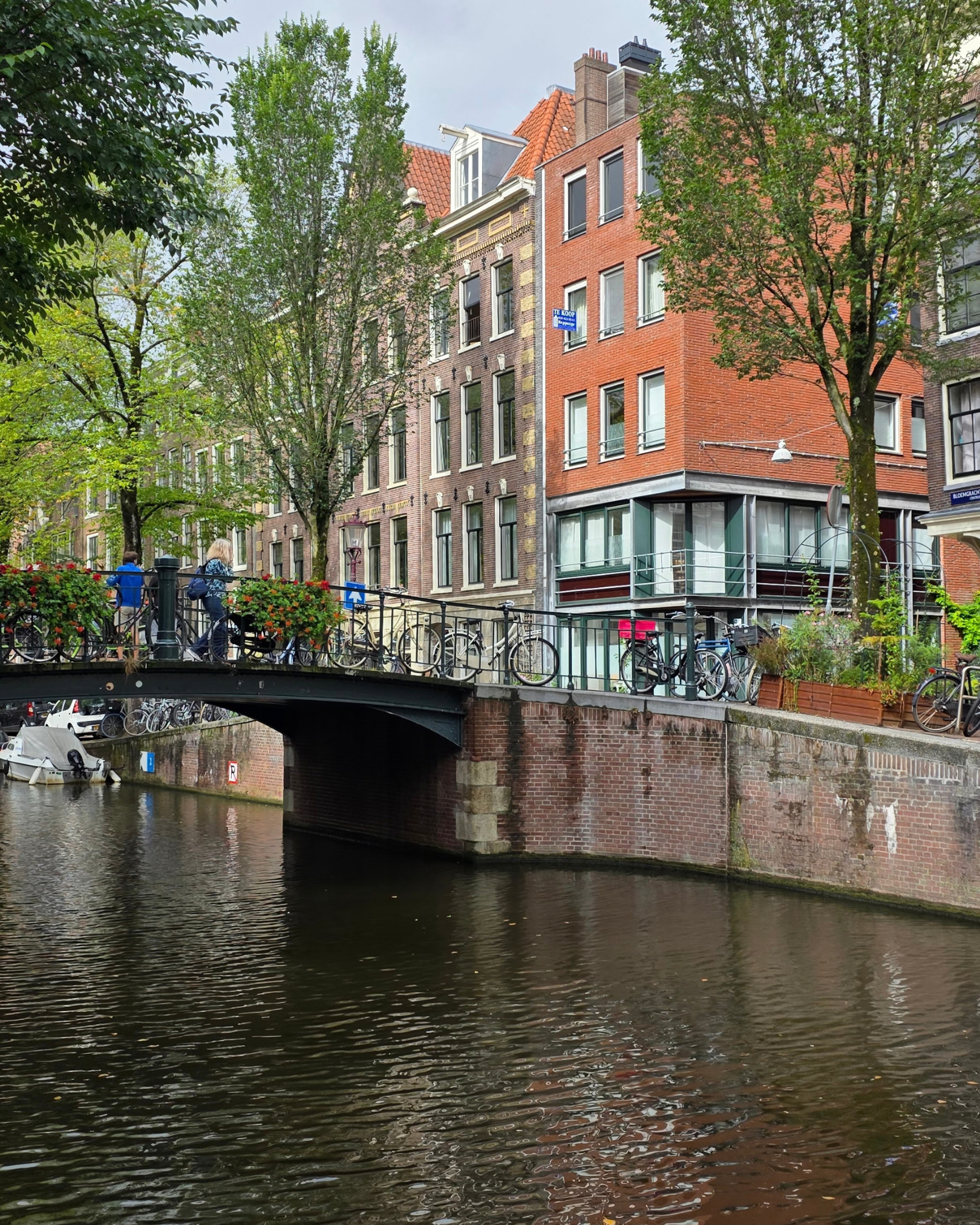
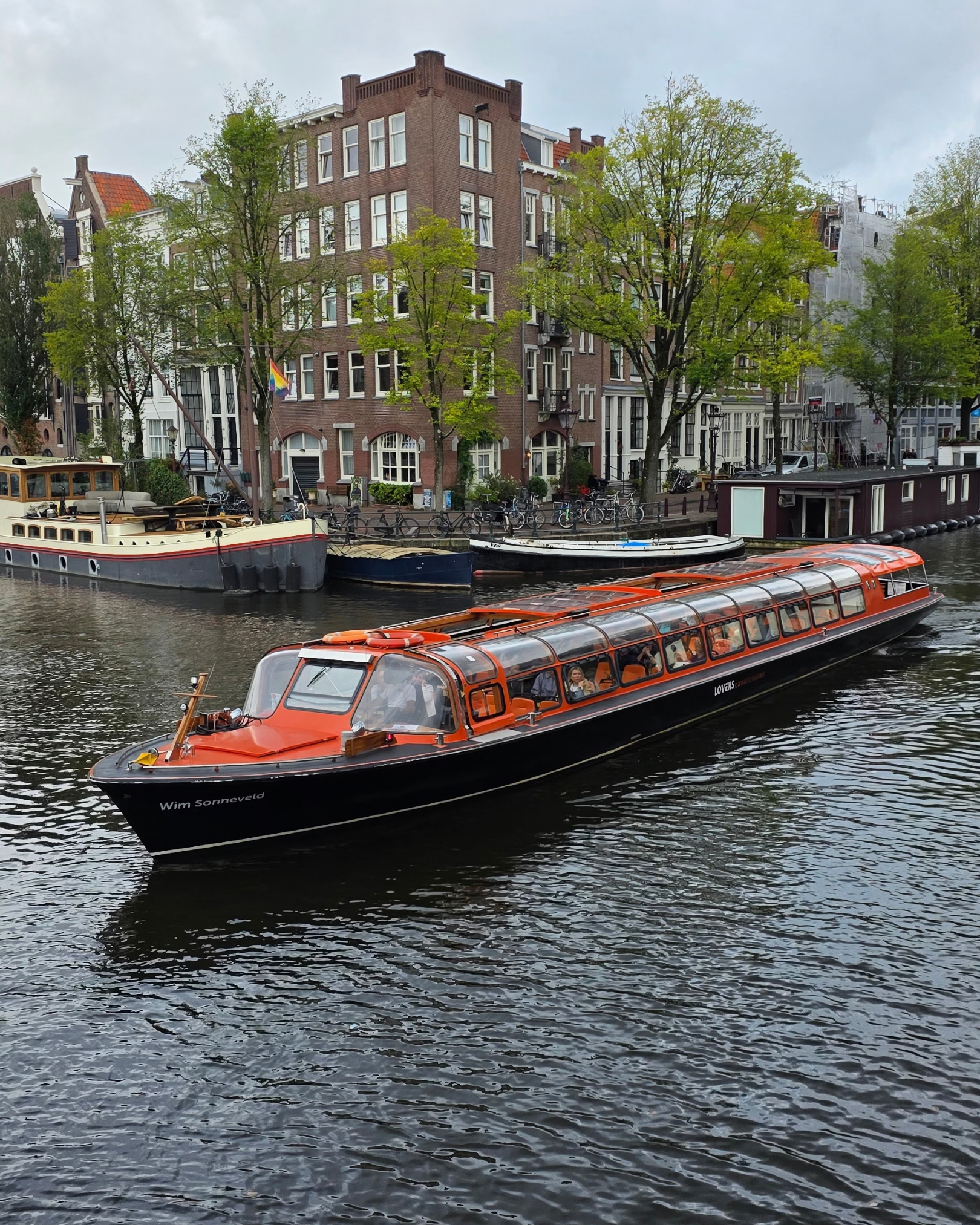
Then there were the bicycles. They came from every direction, moved at impressive speed and clearly had the right of way, whether we understood the rules or not. Crossing a street became a team exercise: look for cars, look for trams, look for bicycles, then look for bicycles again.

We stayed at the beautiful Pulitzer Amsterdam, a collection of historic canal houses woven together between the Prinsengracht and Keizersgracht in the Nine Streets area. It was perfectly situated beside the Jordaan and within walking distance of almost everything we wanted to see. The hotel itself felt like a destination, with layered interiors, intimate spaces and endless design details to notice.

That evening we had dinner at Brasserie Marie, a French inspired restaurant overlooking the Amstel River. It was a polished first taste of the city and a very good way to ease into the trip.


Day Two: Seeing Amsterdam on Two Wheels

There is no better way to understand Amsterdam than by joining the locals on a bicycle, so we began our second day with Mike’s Bike Tours. Riding through the city was equal parts exciting and mildly terrifying, but once we found our rhythm, it gave us an entirely different perspective.

Our guide stopped the group throughout the tour to share the history of the city and explain how Amsterdam was built on soft, marshy ground. Many of its buildings rest on long wooden piles driven down to a firmer layer below. We also learned why so many of the narrow canal houses have hooks projecting from the top. With steep staircases, tight interiors and very few elevators, furniture and goods were historically hoisted up from the street and brought in through the windows. Suddenly those hooks made perfect sense.

One of the things that impressed us most was how beautifully preserved and maintained everything appeared. The doors, railings and window trim often looked freshly painted, and so many of the façades had a pristine, high gloss finish. Anyone who has tried to keep a high gloss surface looking flawless knows this is no small achievement.
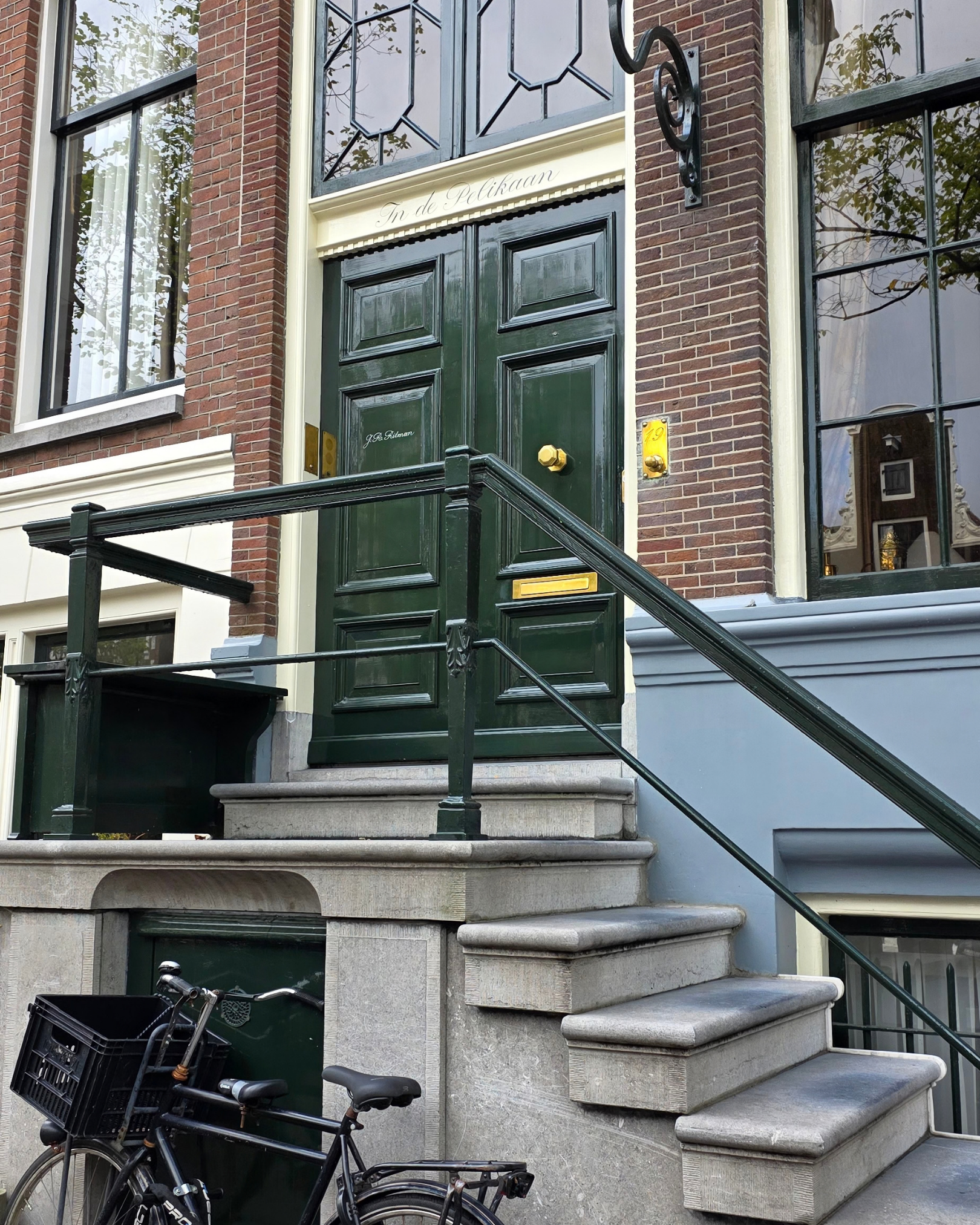
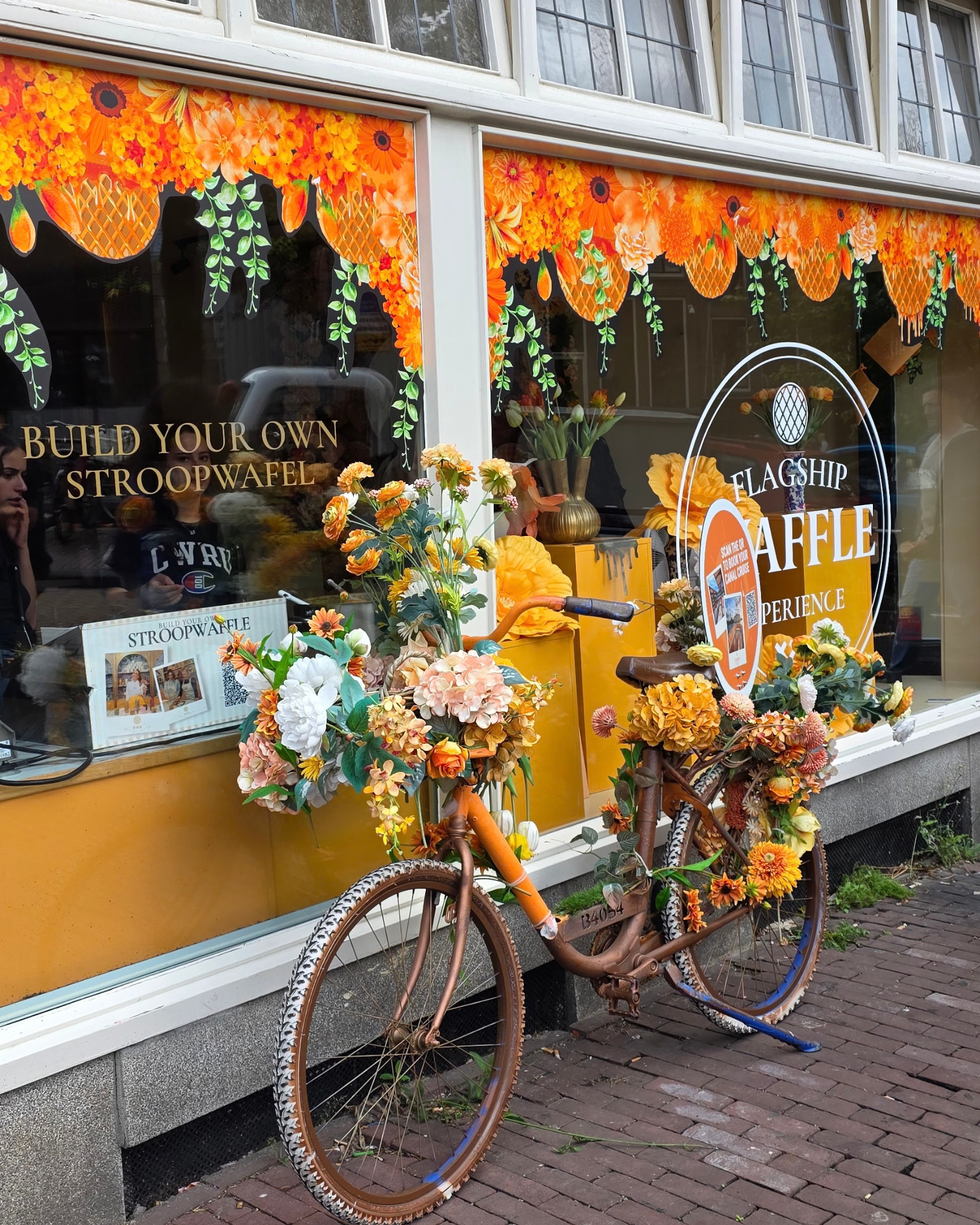
After the tour, we returned to the Jordaan and explored it more slowly. It had a wonderful neighbourhood feeling, with tiny gardens, beautiful house fronts, independent shops and busy little cafés tucked along the canals. It felt lively and residential at the same time, and quickly became one of our favourite parts of the city.

We stopped for lunch at a corner restaurant overlooking a canal and settled in for some excellent people watching. Between the pedestrians, cyclists and cars sharing a surprisingly small amount of space, there were several near collisions and no shortage of entertainment.

We had hoped to visit both the Van Gogh Museum and the Anne Frank House, but this was where our relaxed approach to travel worked against us. Both were sold out. If either is important to you, book well in advance. Apparently, simply arriving in Amsterdam and hoping for the best is not an official ticketing strategy.

That evening we had dinner at Jansz., followed by cocktails at the intimate and beautifully designed Pulitzer’s Bar. From there, we changed the mood completely and ended the night at Bourbon Street for live music. One of the things we loved about Amsterdam was how easily the evening could move from elegant cocktails to a loud, casual music bar without feeling like we had crossed the entire city.

Day Three: Antiques, Art and Dutch Design

We started the morning at Box Sociaal in the Jordaan. It was busy with a mix of locals and tourists and had exactly the kind of easy, energetic atmosphere we wanted for breakfast.

From there, we spent the day doing what we love most when travelling: wandering without rushing. We moved through antique shops ranging from wonderfully jam packed to sparsely curated, visited small galleries and found a few pieces of art that were easy enough to bring home as mementos. Art is one of our favourite things to collect while travelling. It takes up less room than furniture in a suitcase and instantly brings back the feeling of a place once it is hanging at home.

We also could not stop noticing the number of bookstores. They seemed to be everywhere, and the ones we came across felt independently owned, inviting and genuinely part of the neighbourhood. Even the Pulitzer had a cozy reading room tucked into its lounge, which made reading feel less like an amenity and more like a natural part of Amsterdam life. The city seems to have held onto a culture of slowing down, reading and making space for ideas, which we loved.
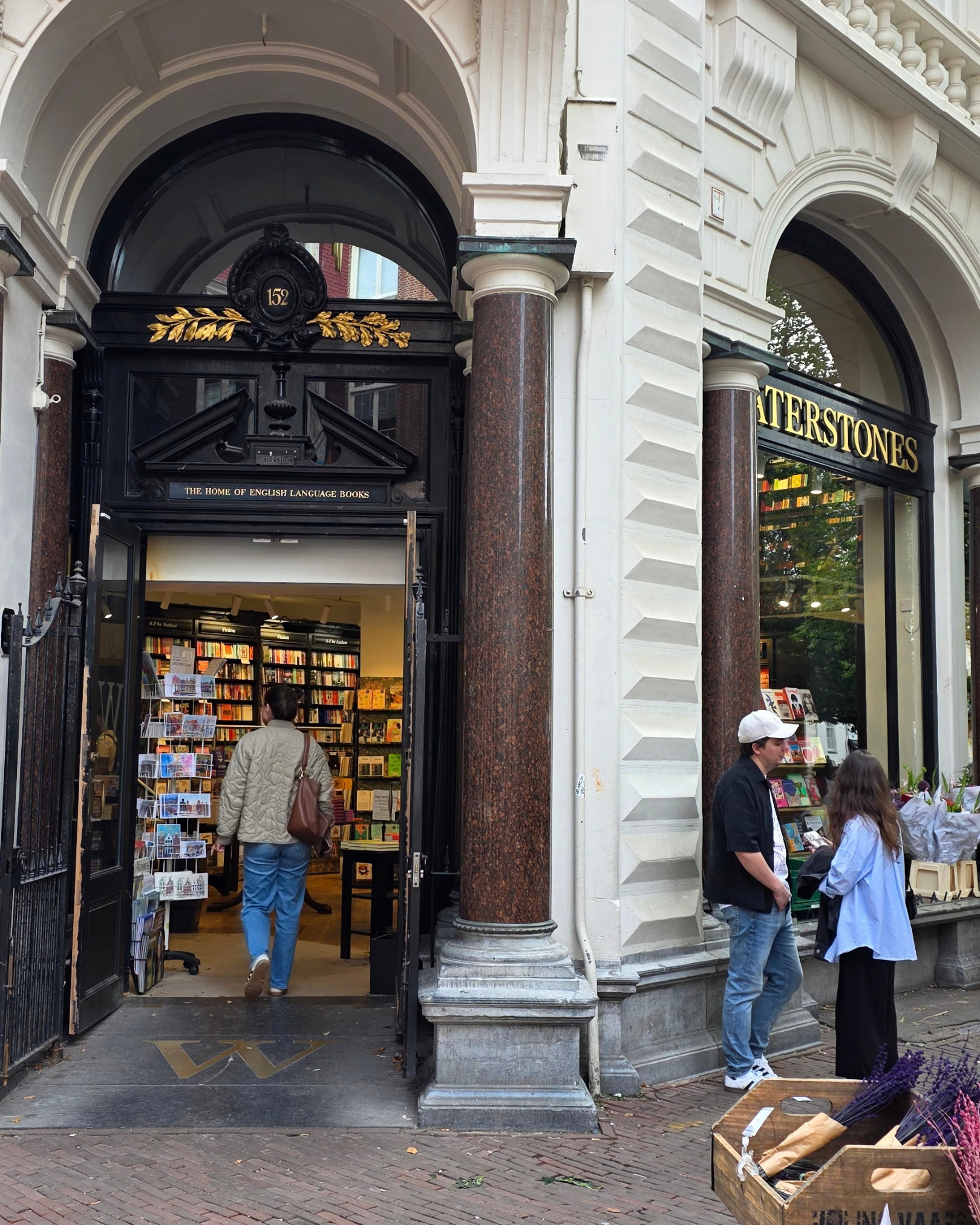
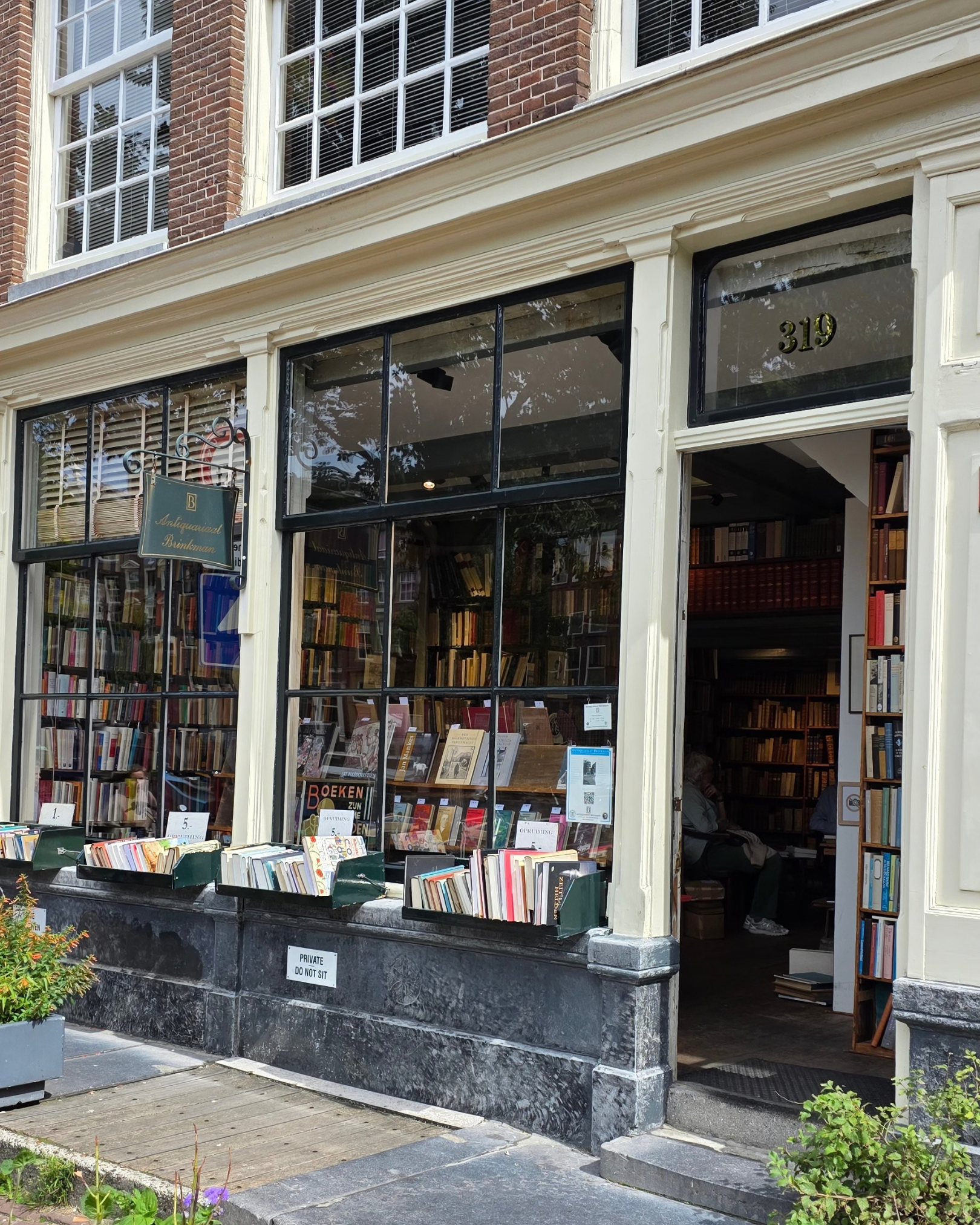
Amsterdam offered plenty of inspiration beyond its architecture. At The Frozen Fountain, contemporary Dutch design was presented as a mix of furniture, art, craftsmanship and experimentation. Other concept stores blended fashion, fragrance, accessories and interiors in a way that felt completely cohesive.

We stopped for lunch at Black & Blue, then continued meandering through the streets and shopping at an unhurried pace. Dinner that evening was at Restaurant Trees, an intimate spot with an open kitchen and canal side tables.

Later, we walked through Amsterdam’s famous Red Light District. It is one of the city’s most talked about areas, and we were curious to experience it for ourselves. Beyond what it is known for, it is also one of Amsterdam’s oldest neighbourhoods, filled with narrow streets, historic buildings, canals, restaurants and a great deal of energy after dark. It was lively, eye opening and undeniably part of the city’s story. We took it for what it was: a neighbourhood unlike anywhere else we had visited.

Day Four: A Rainy Day in Amsterdam Noord

We woke to heavy rain and gave the weather a chance to reconsider, which it did not. After a slow start, we took the free ferry across the IJ to NDSM in Amsterdam Noord.

The former shipyard feels completely different from the historic canal district. It is industrial, creative and a little rough around the edges, with old warehouses, shipping containers, large scale art and unexpected spaces repurposed for culture and hospitality.

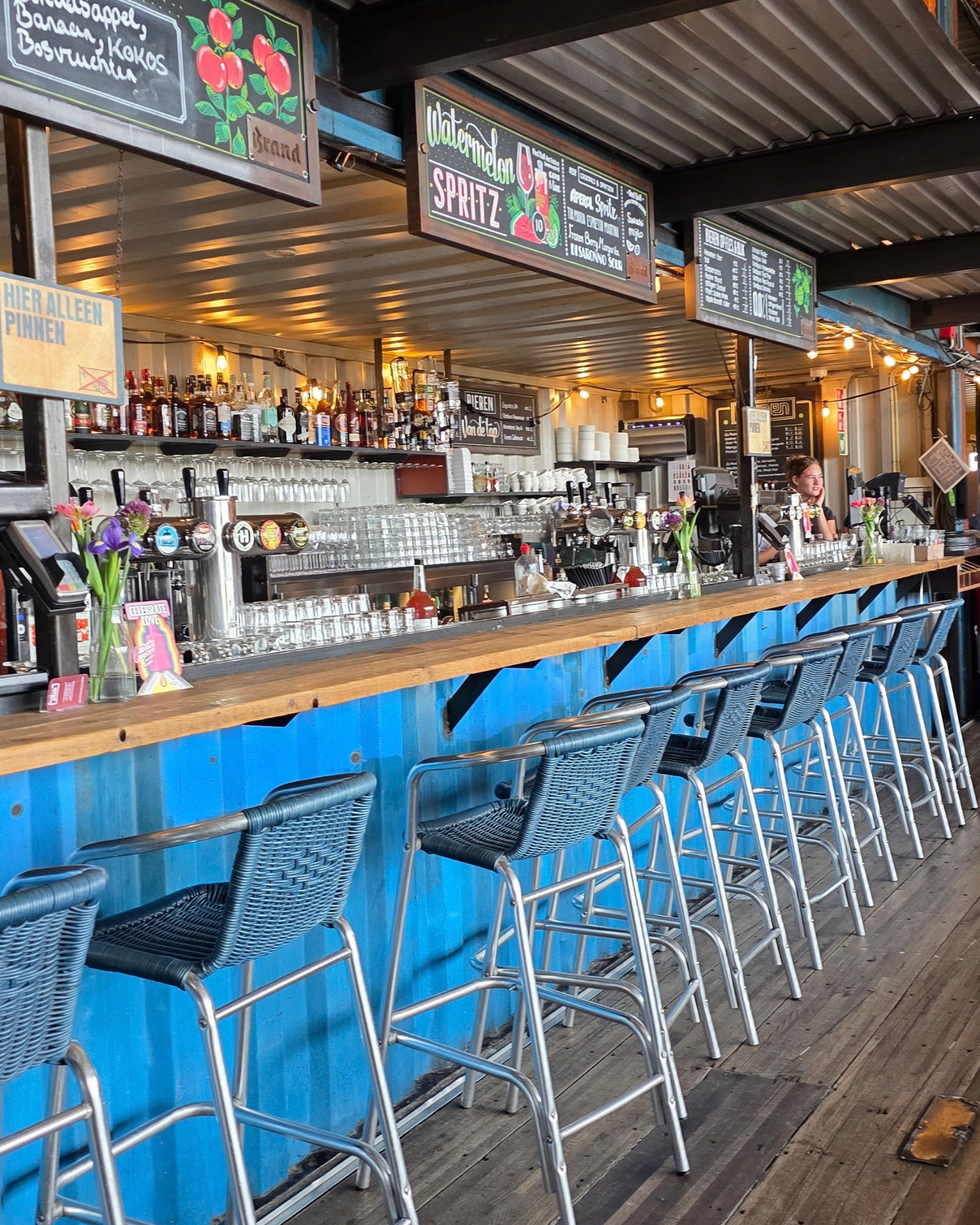
We had lunch at Pllek, a casual restaurant built partly from shipping containers with both dining and lounge seating. As the rain became heavier, we settled into the leather lounge chairs and took our time over lunch while watching it pour outside. There are worse places to be stranded by the weather.

Once the rain eased enough for us to venture out, we walked over to the STRAAT Museum. Housed in a former shipbuilding warehouse, the scale of the work allowed us to appreciate graffiti and street art in a completely different way. When you can step back and see an enormous work in its entirety, you begin to notice the composition, technique, storytelling and social commentary rather than seeing only a painted wall.
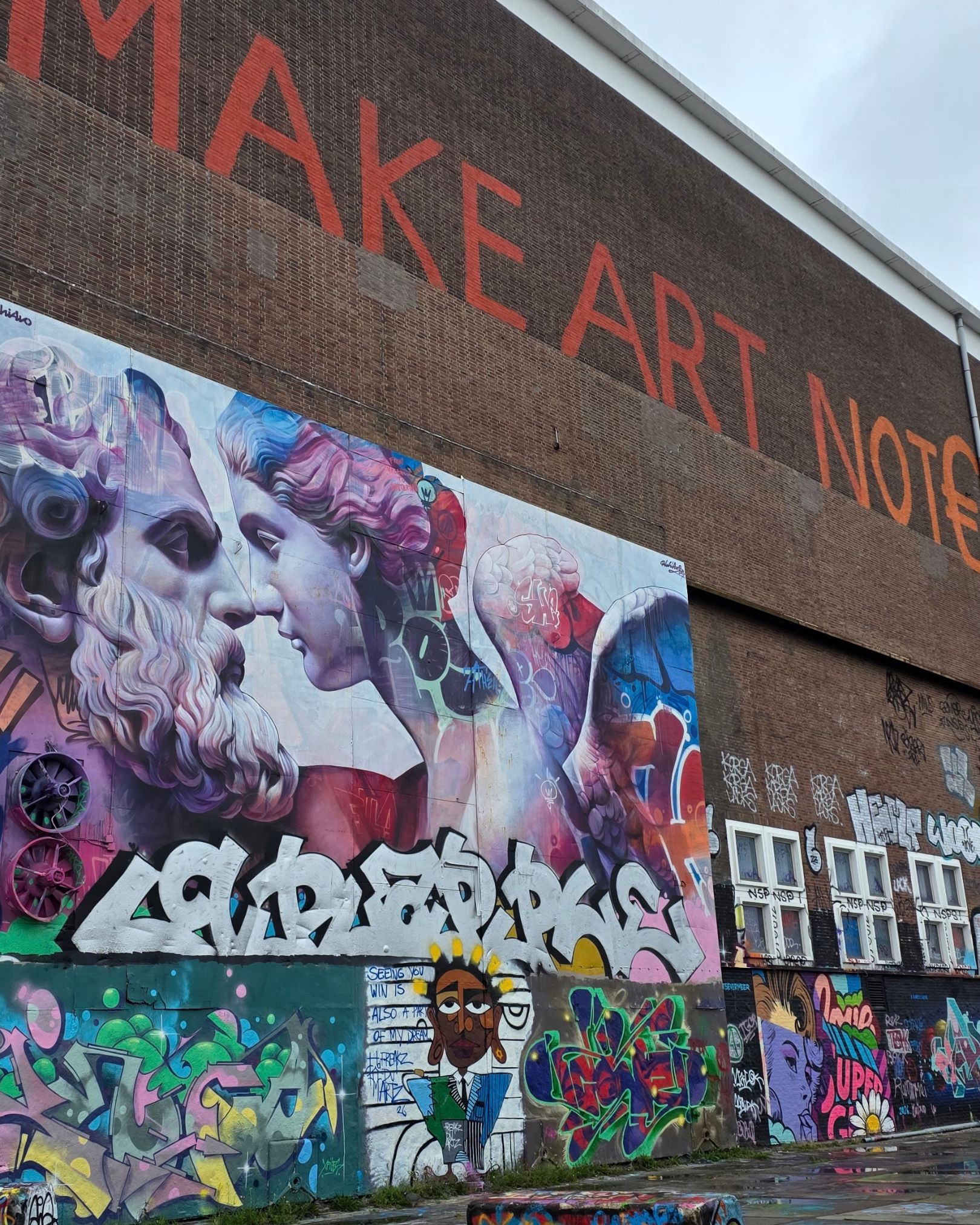
The setting made the experience even more powerful. The industrial building, the history of the old shipping yards and the monumental artwork all belonged together. We came away with a new appreciation for street art as both creative expression and a way of communicating ideas in public spaces.

We returned to the hotel in the afternoon for a rest, then headed back out and wandered into a few Irish pubs to soak up the evening energy.

Dinner was at Mata Hari, a moody restaurant tucked into the Red Light District. It is named for Mata Hari, the Dutch dancer who became one of history’s most famous alleged spies during the First World War. The dark, layered interior felt perfectly suited to both her story and the surrounding neighbourhood.

Day Five: One Last Beautiful Breakfast

On our final morning, we had a long breakfast at Morgan & Mees. The food was lovely, but naturally, we spent almost as much time studying the interior. It was a relaxed final stop and gave us a chance to sit, look back on the trip and delay leaving just a little longer.

After breakfast, we walked away from the main centre toward the Centrale Markthal and happened upon THRIFTPARK, a curated flea market festival filled with vintage fashion, independent makers and creative workshops. The enormous warehouse had been transformed into a playful, energetic marketplace where you could thrift, paint ceramics, make jewellery, upcycle clothing and try all kinds of other hands on activities. It was such a fun surprise and another example of how naturally Amsterdam seems to bring creativity and sustainability together.

From there, it was a quick train ride to the airport and time to say farewell to Amsterdam.

As designers, we left with a new appreciation for the way Amsterdam makes narrow spaces feel intentional. Tall windows draw in natural light, mirrors extend sightlines, and rooms unfold one after another. Pale walls create a sense of openness, while dark floors and carefully placed contrast give the interiors weight and character. Rather than fighting the limitations of the architecture, the most beautiful spaces seem to embrace them.

Five days gave us a wonderful introduction to Amsterdam, but certainly not enough time to explore the neighbouring towns we heard so much about. The city surprised us with its many layers. It is historic yet progressive, meticulously maintained yet filled with creative energy, and undeniably beautiful without feeling overly polished. We came for the canals and architecture, but left equally inspired by the interiors, independent shops, art and confidence of its design culture.